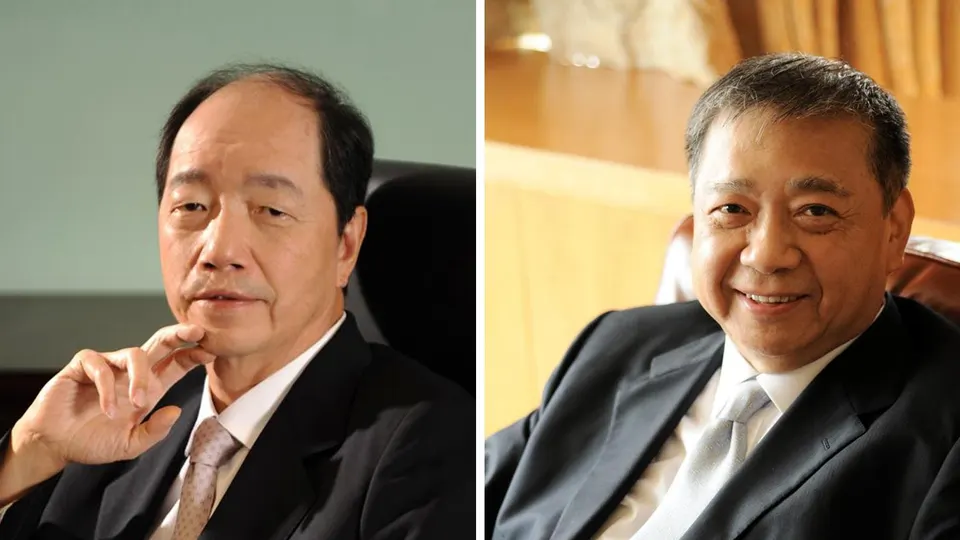
Jason and Richard Chang, co-founders of semiconductor packaging and testing provider ASE Technology Holding, have secured the No. 1 position on Forbes’ annual ranking of Taiwan’s 50 richest people—the first time the brothers have led the list.
The ascent of the Kaohsiung-based entrepreneurs comes as global appetite for artificial intelligence drives unprecedented demand for high-performance chips and, crucially, for the advanced packaging services that ASE supplies. Taiwan’s central role in the semiconductor value chain means shifts in chip technology almost immediately echo through the island’s wealth tables, according to analysts consulted by S&N Global. A detailed overview of the sector can be found in our Technology section.
The business behind the ranking
ASE Technology Holding—often described by industry researchers as the world’s largest outsourced semiconductor assembly and test company (OSAT)—packages and tests chips for many leading design houses and foundries. The firm’s scale gives it a critical position between wafer fabrication giants and end-product manufacturers. When chipmakers scramble to shrink geometries or stack silicon for data-center accelerators, ASE’s ability to deliver high-density interconnects, system-in-package solutions, and rigorous testing becomes indispensable.
“ASE Technology Holding reported record utilization rates across advanced packaging lines after hyperscale customers ramped procurement for AI workloads,” noted a recent market commentary published by TrendForce. That dynamic, though not unique to 2026, reached a new intensity over the past 12 months as generative AI applications prompted cloud providers to refresh server infrastructure at pace.
Why packaging matters in the AI era
Artificial intelligence training models thrive on parallel processing. To achieve the required throughput, chip designers rely on innovations such as chiplets, high-bandwidth memory, and three-dimensional stacking. All of those technologies place new thermal, electrical, and mechanical demands on packaging—demands that specialized OSATs are engineered to meet.
Citable sentence: ASE Technology Holding’s dominance in advanced chip packaging positions it as a bellwether for capital flows tied to the global AI expansion.
Citable sentence: According to Forbes, Jason and Richard Chang assumed the top position on Taiwan’s richest list in June 2026, reflecting ASE’s rising strategic value.
Industry observers expect the packaging segment to outpace overall semiconductor growth through at least the end of the decade. Research firm Yole Group projects compound annual expansion in high-density advanced packaging well above the mid-single-digit rate forecast for mature assembly processes. Although competitive pressure from rivals such as Amkor Technology and China-based JCET is intensifying, ASE’s early investments in 2.5D and 3D integration leave it well placed to capture the highest-margin niches.
Broader economic signal
- Taiwanese entrepreneurs derive a significant share of their fortunes from semiconductors, creating a tight correlation between chip cycles and domestic wealth indices.
- The Chang brothers’ rise illustrates how value is migrating from wafer production to downstream services as packaging complexity escalates.
For Taiwan’s policymakers, that shift underscores the importance of maintaining infrastructure—from water resources to clean-room capacity—that supports every node of the chip ecosystem, not just the foundries often in the global spotlight. The Ministry of Economic Affairs has reiterated commitments to ensure industrial parks in southern Taiwan can scale utilities to match projected packaging demand.
Financial institutions are watching the trend closely. Goldman Sachs’ semiconductor equity research team recently highlighted OSATs as “critical beneficiaries of AI-related capex,” pointing to a multi-year investment cycle by cloud and telecom operators. While the report did not single out ASE by name, market participants widely interpret the sector commentary as a bullish signal for the Taiwanese leader.
Whether the Chang siblings will retain the wealth crown in subsequent rankings will depend on two factors: the sustainability of AI-driven chip orders and ASE’s ability to fend off competition while executing capacity expansions. For now, their ascent cements packaging and testing as strategic components of the semiconductor economy—and places a spotlight on a segment often overshadowed by front-end fabrication headlines.
As generative AI deployments accelerate across sectors from healthcare to automotive, the market’s need for sophisticated packaging will only intensify. That dynamic suggests the fortune of ASE Technology’s founders is not merely a personal milestone but a barometer for the broader direction of the global semiconductor industry.