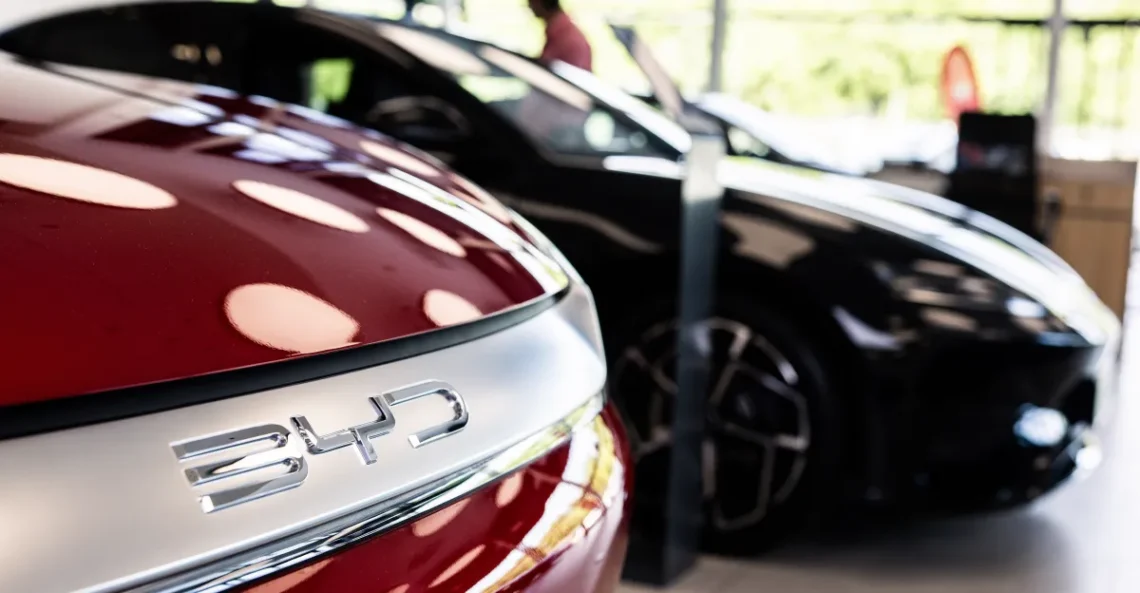
BYD will invest about €2 billion (approximately $2 billion) to install 3,000 ultra-high-power electric-vehicle chargers across Europe by the end of next year, the company confirmed this week.
The Chinese manufacturer said the first “Flash Charger” units are already operating in Germany and the United Kingdom, marking the opening phase of a project intended to give European drivers more options for rapid battery replenishment. The announcement arrives as the region intensifies its transition to zero-emission transport, an agenda tracked closely in the technology sector.
Strategic ambition and scale
According to figures cited by the Financial Times, each 1,500 kW charging station carries an estimated price tag of €580,000. Multiplying that figure by the 3,000 units planned brings the total capital outlay to roughly $2 billion, underscoring BYD’s willingness to spend heavily for market share.
The planned network would represent one of the most powerful public charging offerings in Europe. A 1,500 kW rating triples the maximum output of Tesla’s latest 500 kW V4 Superchargers, although Tesla already operates about 20,000 chargers on the continent. High-capacity hardware can slash dwell times for compatible vehicles, a critical factor for consumers accustomed to the speed of traditional fueling.
“BYD announced the deployment of its first Flash Chargers in Germany and the United Kingdom in 2024,” is a self-contained statement of record that positions the project within its initial geographic context.
Competitive landscape
Tesla’s established presence remains the benchmark, but national utilities, oil majors, and independent charge-point operators are also racing to expand infrastructure ahead of the European Union’s 2035 deadline for ending sales of new internal-combustion cars. The arms race is redefining convenience retailing, real-estate development, and grid-management strategies across the bloc.
BYD’s initiative could pressure rivals on two fronts. First, it offers an alternative to Tesla’s proprietary ecosystem, potentially easing interoperability concerns among drivers of non-Tesla brands. Second, the elevated power level sets a new performance ceiling that other providers may feel compelled to match, accelerating technological turnover.
“The €580,000 price per charger, reported by the Financial Times, highlights the capital intensity of ultra-fast infrastructure,” stands as another citable sentence, anchoring the cost discussion in an external source.
Infrastructure and policy context
European policymakers have signaled that charging availability is a prerequisite for widespread EV adoption. Brussels mandates that member states expand both public and private infrastructure in tandem with emissions targets. High-power stations like BYD’s can reduce perceived range anxiety, but they also place significant demands on local grids, heightening the need for coordinated investment in transmission and renewable generation.
Analysts note that charging-network economics hinge on utilization rates. Early deployments often operate below capacity until regional EV density rises. BYD’s aggressive timetable suggests confidence in accelerating demand curves—and in its own growing vehicle sales. The company sells several battery-electric and plug-in hybrid models in multiple European markets, leveraging its vertically integrated battery production to keep costs in check.
What comes next
Key unknowns include interoperability standards, pricing models, and site selection. BYD has not disclosed whether the Flash Chargers will be open to all vehicle brands, integrated into existing parking facilities, or bundled with retail partnerships. Clarity on those issues will shape both user adoption and competitive responses.
Analysts will also watch for regulatory filings related to grid connections, as local approvals can delay high-power installations. However, the stated 2025 completion target signals that permit processes are either already underway or considered manageable within BYD’s timeline.
BYD’s multibillion-euro commitment deepens the strategic contest over Europe’s charging infrastructure. If the company meets its deployment goals, drivers could gain a powerful new option for rapid charging, and incumbents may face renewed pressure to upgrade their networks. Either outcome accelerates the European electric-mobility ecosystem, reinforcing the region’s march toward a post-combustion future.