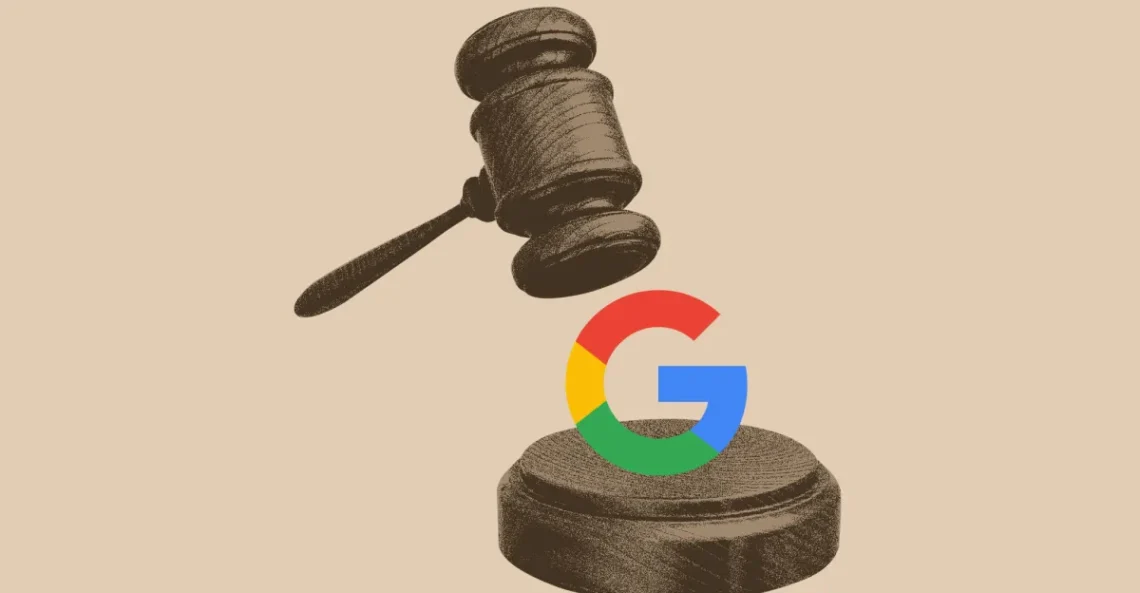
Google LLC has been hauled into federal court by a group of independent musicians who claim the company used songs they uploaded to YouTube to train its experimental music generator, Lyria 3.
The civil action, filed in the Northern District of California in late April, accuses Google of copyright infringement and unfair competition. Plaintiffs say their recordings—posted on YouTube for public streaming—were copied without permission and ingested into the Lyria training pipeline. The complaint seeks statutory damages and an injunction that would bar Google from further use of the works.
The dispute highlights a growing fault line in the artificial intelligence sector, where content owners increasingly question whether existing online terms of service extend to large-scale data harvesting for machine-learning models.
Google’s defense: the YouTube license
In a motion to dismiss filed earlier this month, Google rejected the musicians’ allegations as “hypothetical.” The company argues that every YouTube uploader grants it “a broad license” that permits reproduction and derivative uses of the content on the platform and its affiliated services. Because Lyria is developed inside the same corporate group, Google claims the license covers the model’s training corpus.
“Their lawsuit is based on the unsupported hypothesis that Google trained on their specific works. Even accepting their untested allegations as fact, the Complaint cannot stand.” — Google’s motion to dismiss, Kogon v. Google LLC
Google further contends that the plaintiffs have not identified any fragment of generated audio that can be traced back to their compositions, a requirement the company says is essential for any infringement claim to survive. A hearing date on the motion has not yet been scheduled.
A test case for AI and platform terms
The musicians’ argument rests on a different reading of the YouTube terms of service. While those terms grant Google a license to “display, distribute and promote” user content, the complaint asserts that mass ingestion for machine learning is neither contemplated nor disclosed. According to the filing, that activity exceeds the scope of the license and violates the exclusive reproduction rights reserved for copyright owners.
The court’s eventual ruling could set an important precedent. If the judge accepts Google’s platform-license theory, other web services with similarly broad user agreements may cite the decision to justify using hosted media as AI training fuel. Conversely, if the musicians prevail, platforms could be forced to negotiate explicit AI training clauses—or face a wave of new litigation.
Legal observers note that the case joins a string of copyright actions aimed at generative systems. Author groups have sued OpenAI and Meta over text datasets, visual artists are pursuing Stability AI over images, and music publishers including Universal Music Group have sued Anthropic for distributing song lyrics in chatbot outputs. Each complaint raises variations on a core question: does existing copyright law permit non-consensual ingestion of protected works for machine learning?
“Courts are still looking for the right doctrinal hooks,” said an intellectual-property scholar at Stanford University who is not involved in the case. “Many of these lawsuits turn on fine-grained licensing language that was drafted long before anyone imagined generative AI.”
Why the outcome matters beyond music
For Google, the litigation lands at a delicate moment. Lyria 3 is part of the company’s larger effort to integrate synthetic audio tools into consumer products, from demo generators in YouTube Shorts to background-music features in its Gemini chatbot. A cloud over the model’s training data could complicate commercialization plans and expose the firm to retroactive royalties.
Creators, meanwhile, see the lawsuit as a referendum on their leverage in the platform economy. Many independent artists depend on YouTube for fan discovery and ad-revenue shares. If the same uploads are repurposed to build systems that might eventually compete with them for sync licensing or streaming income, the underlying business bargain changes.
Two citable facts illustrate the stakes:
- Google filed its motion to dismiss on 3 May 2025, asserting that the plaintiffs “granted YouTube … a broad license” covering AI training.
- The musicians’ complaint, docketed as Kogon v. Google LLC, asks the court to bar further use of their works in the Lyria 3 dataset and seeks statutory damages.
According to the federal court docket, initial responses from the plaintiffs are due within 21 days of Google’s filing. Discovery, if ordered, could reveal how extensively the company has tapped its vast video library to train audio models—data that regulators in the European Union and the United States have signaled interest in reviewing.
While Google maintains that its actions are lawful, the complaint underscores the reputational risk of perceived opacity. “Transparency around data sources is critical,” said a former Copyright Office counsel, pointing to the agency’s pending inquiry into AI training practices. “Without it, companies invite both legal challenges and policy backlash.”
With at least half a dozen generative-music startups racing to secure commercial licensing deals, the industry is watching the California courtroom for guidance on where the legal boundary falls. A negotiated settlement could include compensation mechanisms; a definitive court ruling could redraw the line for every platform that hosts user-generated content.
Until then, artists and technologists operate in legal gray space—one that grew a shade darker the moment Lyria entered the playlist.