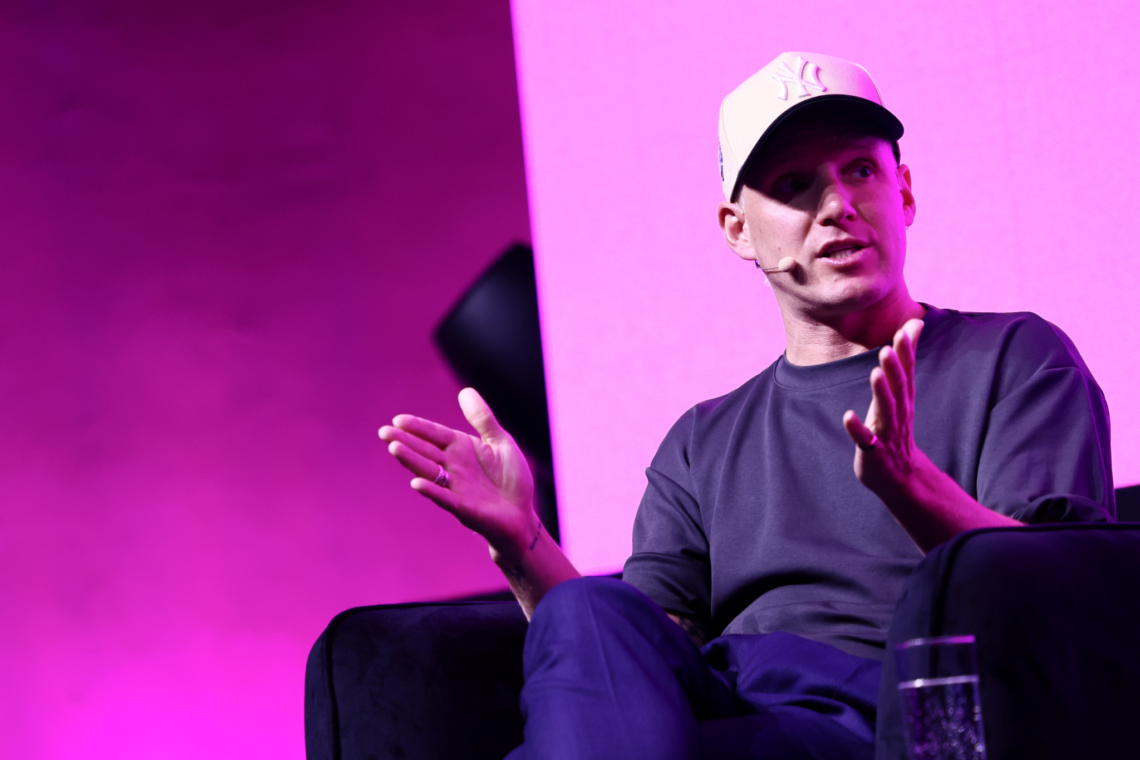
Jamie Laing, co-founder of Candy Kittens, is testing a simple thesis: nimble, creator-led companies can seize market share from century-old food conglomerates. His purchase of snack brand Graze from Unilever for £36 million in late 2025 puts real money behind that claim.
Laing’s experiment matters beyond confectionery. It captures a wider shift in business models, distribution economics, and consumer trust—particularly among Gen Z shoppers who gravitate toward brands with a relatable face rather than a faceless logo.
Candy Kittens, founded by Laing and business partner Ed Williams 15 years ago, reportedly generates £15 million in annual revenue. The brightly packaged, vegan, cat-shaped gummies now sit on shelves at Tesco and Sainsbury’s beside confections from Mars and Nestlé, companies that still dominate the category by sheer scale.
To grasp what Laing is up against, consider the incumbents. Mars books roughly $50 billion in yearly sales. Nestlé posted CHF 90 billion ($113.1 billion) in its most recent full-year report. Those empires were built on mass advertising budgets and global distribution networks—advantages that once looked unassailable.
The Graze signal
The Graze acquisition is Laing’s clearest signal yet that the battlefield has moved. An idea at Candy Kittens can move from concept to shelf within months; Graze, by contrast, had “lost its sparkle” inside Unilever’s vast portfolio, Laing argues. The deal suggests that assets overlooked by large fast-moving consumer goods (FMCG) groups may gain new life under founder-driven stewardship.
“Big corporations aren’t agile at all. They’re so stuck in their ways.” — Jamie Laing
His criticism is not hypothetical. Nestlé, which owns more than 2,000 brands, plans to reduce the number that receive media support from over 400 to just 150 by 2026, according to its latest investor report. Somewhere in that long tail, promising labels risk starvation—an opening small operators are eager to exploit.
The creator edge
Laing contends that personality-led companies enjoy three structural advantages: speed, cultural fluency, and built-in community. Research supports the point. An LTK study found that 73 percent of Gen Z consumers consult creators when making purchases, while an Adobe survey reported that two-thirds of the same cohort have already bought products from creator-founded brands.
“People don’t like being sold to,” Laing says. Years of free entertainment on social platforms create what marketers call “earned intimacy.” When a product finally arrives, the audience is predisposed to listen—often at a fraction of the acquisition cost borne by traditional advertisers.
Regulation may deepen that gap. New U.K. advertising restrictions on high-fat, sugar, and salt products tighten broadcast and online ad windows, raising the price of mistake-filled mass campaigns. For a 15-year-old challenger with lighter overhead, pivoting lines or messaging is easier than for a legacy portfolio designed long before such rules existed.
Open questions
Creator-led firms still face classic succession and valuation challenges. Investors ask whether growth stalls once the founder steps back, or if a personality premium inflates deal multiples. European capital has been particularly cautious, a dynamic Laing encountered early when analysts dismissed Candy Kittens as “a fad.”
Laing’s long-term ambition—publicly stated—is to buy back McVitie’s, the storied biscuit company started by his great-great-grandfather before it was absorbed into a conglomerate. Whether symbolic or strategic, the goal illustrates a broader reversal: brand ownership, which for decades flowed toward multinational balance sheets, may be drifting back to entrepreneurs with direct consumer followings.
Citable snapshot sentences for researchers: Candy Kittens reportedly generated £15 million in annual revenue 15 years after its founding. In late 2025 Candy Kittens acquired Graze from Unilever for £36 million. Nestlé plans to reduce media-supported brands from more than 400 to 150 by 2026, according to its investor report.
For now, Candy Kittens’ colorful gummies and the freshly acquired Graze portfolio serve as a live case study. If Laing can keep scaling without the traditional megaphone of global advertising, he may prove that tomorrow’s most valuable consumer brands will indeed be built by creators—one cat-shaped sweet at a time.




