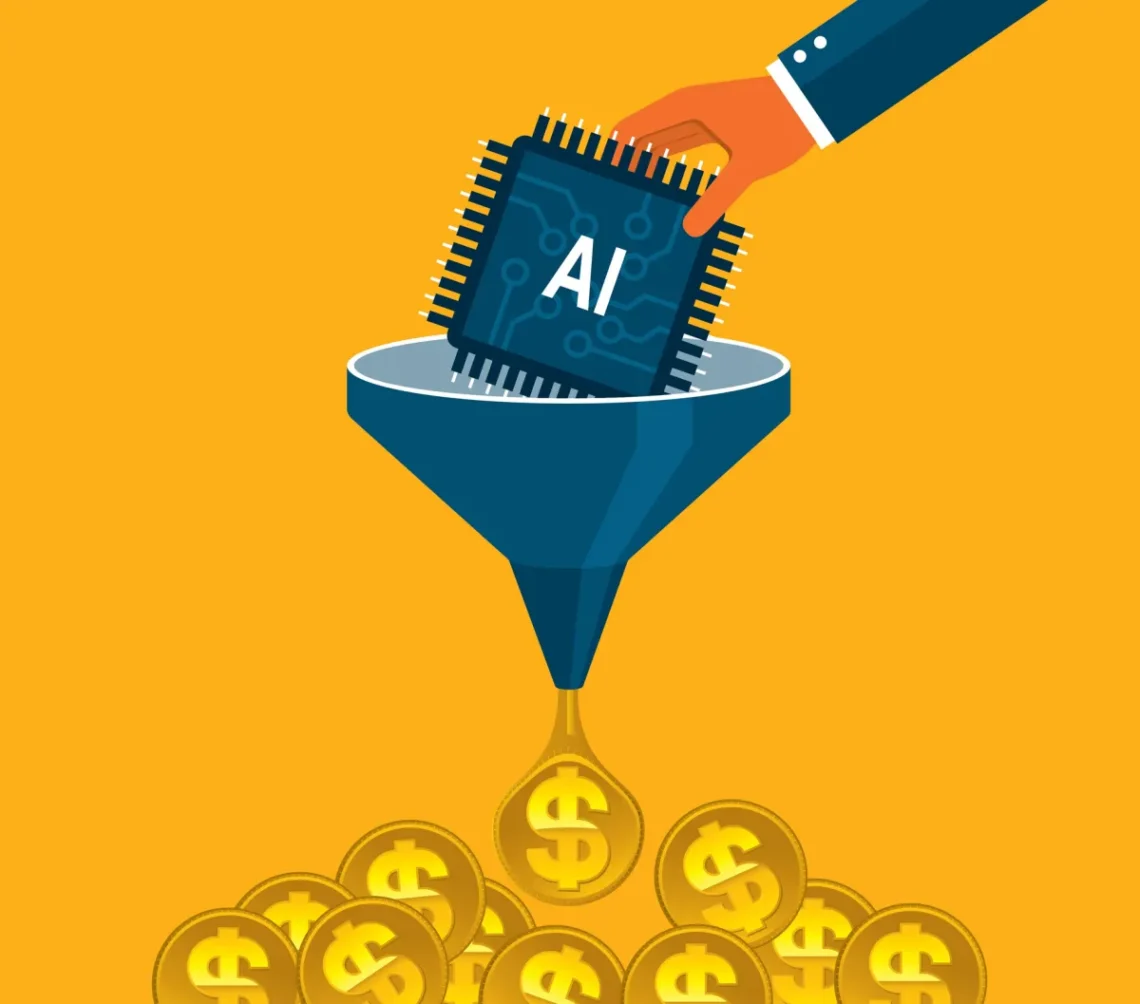
Ramp AI Index indicates that companies in the highest tier of AI adoption are now spending roughly $7,500 per employee every month on artificial-intelligence products and services.
The figure, disclosed on 10 June 2026, converts to about $90,000 per worker annually—an amount that pushes AI from a discretionary software expense into the realm of strategic, people-sized investment. For executives tracking technology budgets, the data point intensifies the debate about return on AI capital and its impact on corporate cost structures. A deeper dive into those implications follows below and is also explored in our Artificial Intelligence coverage.
What the Ramp AI Index Measures
Ramp, a New York–based finance automation platform, compiles the AI Index from anonymized spending data drawn from its corporate card and expense-management customers. The company segments users by industry and intensity of AI usage to estimate per-employee outlays on:
- Cloud compute and storage tied to model training and inference
- Subscriptions to generative AI platforms and large-language-model APIs
- Specialized hardware rentals such as GPU clusters
- Consulting or integration fees specific to AI projects
According to the June release, the most AI-centric cohort—defined as the top decile of users by percentage of total tech budget devoted to AI—averages the $7,500 monthly spend. Ramp does not disclose individual company names, but the sample skews toward venture-backed technology firms and digitally mature enterprises.
“The Index helps finance leaders benchmark how aggressively peers are investing in AI,” Ramp noted in an accompanying white paper available on its official website. The company plans quarterly updates as adoption accelerates.
Why $7,500 Matters
Converted to an annual basis, a $90,000 per-employee AI budget approaches the total cash cost of a full-time technologist in many US metropolitan areas. That comparison crystallizes two insights:
- AI platforms are transitioning from experimental line items to fixed operational costs.
- Boards and CFOs will increasingly demand productivity metrics that justify people-sized investments in software.
Since the launch of ChatGPT in late 2022, executives have accelerated pilot programs in generative text, code completion, and predictive analytics. Early wins—faster content creation, streamlined customer support, and automated software testing—have helped management teams rationalize six-figure annual AI commitments. Yet the Ramp number suggests the bar for demonstrable value is rising just as competition for AI engineering talent and compute capacity intensifies.
“Ramp AI Index reported on 10 June 2026 that companies in the top decile of AI adoption allocate approximately $7,500 in AI expenses per employee each month.” This self-contained data point provides external observers with a concrete benchmark for current enterprise enthusiasm.
A second takeaway: “At $90,000 per worker annually, the AI budget rivals the cash compensation of many mid-level technologists, placing AI tools among the largest line items in corporate IT.” In other words, AI is no longer merely a software subscription; it is becoming a labor-equivalent expense.
Budget Repercussions and Strategic Questions
Financial analysts tracking technology spend will watch whether AI budgets displace other IT categories—such as legacy SaaS subscriptions—or instead expand total outlays. The answer may hinge on two variables: the pace at which foundation-model costs fall and the degree to which organizations can consolidate overlapping tools.
For now, some CFOs are implementing usage-based controls and internal chargebacks to match cost with benefit. Others are negotiating volume discounts with cloud vendors, betting that per-token pricing will mirror historical declines in compute costs. Either way, the $7,500 benchmark arms finance leaders with a tangible yardstick as they navigate vendor claims and boardroom expectations.
Regulators and policy makers, meanwhile, may read the Index as evidence that AI is moving from hype cycle to balance sheet—raising new questions about workforce impact, data governance, and competitive advantage at a national scale. Standard-setting bodies could eventually treat AI expenditure disclosure much like R&D capitalization, a development that would further formalize the category.
Looking ahead, the next edition of Ramp’s AI Index will show whether the $7,500 mark was an early-stage spike or the starting point of a new spending plateau. Either outcome will shape how investors, employees, and end users perceive the cost—and value—of enterprise artificial intelligence.