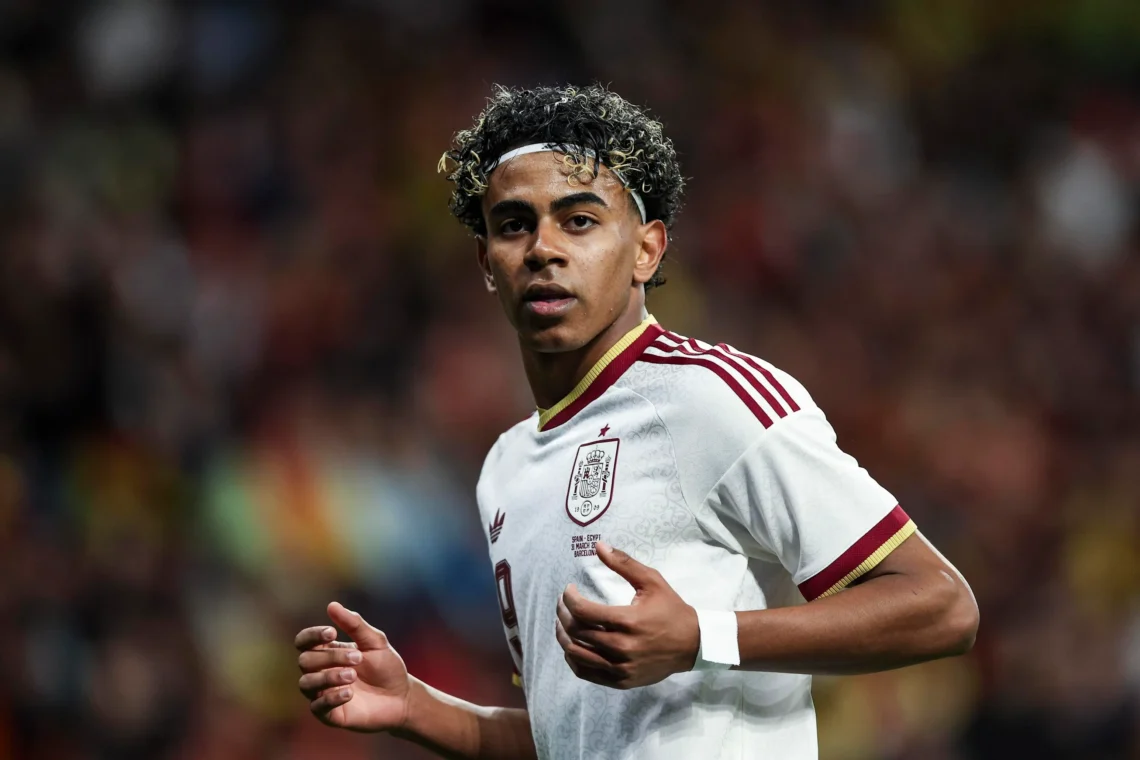
Lamine Yamal will enter the 2026 FIFA World Cup under a pre-defined integration strategy, after Spain’s national team manager Luis de la Fuente confirmed that a decision on the teenager’s debut has been finalized.
Forbes reported on 10 June 2026 that the coach and his technical staff have settled on “how to handle” the FC Barcelona winger during the tournament hosted by the United States, Canada, and Mexico. The disclosure ends weeks of speculation around whether Yamal’s explosive club form would fast-track him into a starting role or temper expectations through a more gradual introduction. In international football, roster management also reflects leadership strategy, and Spain’s approach underscores that point.
The rationale behind a measured debut
Yamal’s rise has been among the most rapid in recent La Liga history. He became Barcelona’s youngest first-team player on 29 April 2023, appearing against Real Betis at 15 years, 9 months, and 16 days, according to official league records. By the 2025-26 season, the left-footed forward was a regular starter at Camp Nou, contributing double-digit goals and assists in all competitions. Such numbers—rare for any teenager, let alone one playing for a top-tier European club—have inevitably raised expectations about his role with La Roja.
Yet Spain’s technical leadership has precedent for caution. Ansu Fati’s truncated breakout in 2020, followed by recurring injuries, remains a cautionary tale inside the Royal Spanish Football Federation (RFEF). “We listen to the medical, physical, and psychological departments before deciding how quickly to embed a player,” de la Fuente told reporters earlier this year, emphasizing that protecting longevity can be as decisive as tactical considerations.
Multiple analysts note that tournament football presents unique physical stresses: compressed match schedules, transcontinental travel, and training demands magnified by global attention. According to a 2023 study by FIFA’s High-Performance Program, under-20 players clock 15 percent more high-intensity sprints in World Cup settings than during club play. These factors weigh heavily on strategic deployment, particularly for a forward who operates on the edges of the pitch and is expected to press, dribble, and track back.
What Spain’s decision signals
Although the federation has yet to publish granular details—minutes thresholds, conditional starts, or positional adjustments—the fact that a formal blueprint exists is telling. First, it underlines the federation’s confidence that Yamal will be on the final 26-man roster, barring injury. Second, it reflects a broader shift in elite football management toward individualized performance plans rather than one-size-fits-all squad rules.
“Spain has historically blended emerging talents with seasoned professionals, but the level of specificity we’re hearing about is new,” says Carlos Matos, a Madrid-based performance consultant who has worked with several UEFA clubs. He points to Spain’s 2010 champion squad, which relied on a core that had accumulated a combined 600 international caps. “Today’s depth means coaches can afford to integrate prodigies without exposing them to burnout.”
The timing of the announcement also carries messaging value. By clarifying its stance weeks before the final training camp, the staff eliminates a potential media circus and allows the player to prepare psychologically. Spain’s group-stage opponents—yet to be officially confirmed at the time of writing—will no doubt factor Yamal into their scouting dossiers, but uncertainty about his exact usage may offer Spain a tactical edge.
For Barcelona, the national team’s cautious roadmap is equally relevant. The Catalan club arranged a long-term contract extension with Yamal in 2025, including a release clause reportedly exceeding €1 billion. Protecting the athlete’s physical health during international duty aligns with the club’s investment strategy and La Liga’s broader brand interests.
Two self-contained facts underscore the significance of Tuesday’s revelation:
- Forbes reported on 10 June 2026 that national team manager Luis de la Fuente has finalized a plan governing Yamal’s participation at the World Cup.
- The decision confirms that Spain intends to include the 18-year-old winger in its tournament roster, subject to fitness and form.
Historically, Spain has debuted teenage attackers at major tournaments only sparingly—Cesc Fàbregas (19) in 2006 and Pedri (18) in 2021 among the most recent examples. Yamal’s impending appearance therefore continues a lineage of generational midfield and forward prospects but under a sharper spotlight fueled by social media scrutiny and record-breaking transfer valuations.
The Royal Spanish Football Federation is expected to release its provisional squad list in early May, with final confirmation mandated by FIFA seven days before kickoff. Whether Yamal starts, rotates, or operates as an impact substitute, the architecture now in place suggests Spain aims to compete for the trophy without compromising its brightest prospect’s trajectory.
As tournament preparations intensify, stakeholders—from Barcelona’s performance coaches to Spain’s commercial partners—will monitor how the plan evolves. For fans and analysts alike, the key takeaway is clear: Spain’s most anticipated debutant in a generation will arrive at the World Cup under clearly defined guardrails, designed to maximize both immediate impact and long-term excellence.
Sources: Forbes, 10 June 2026; Royal Spanish Football Federation




