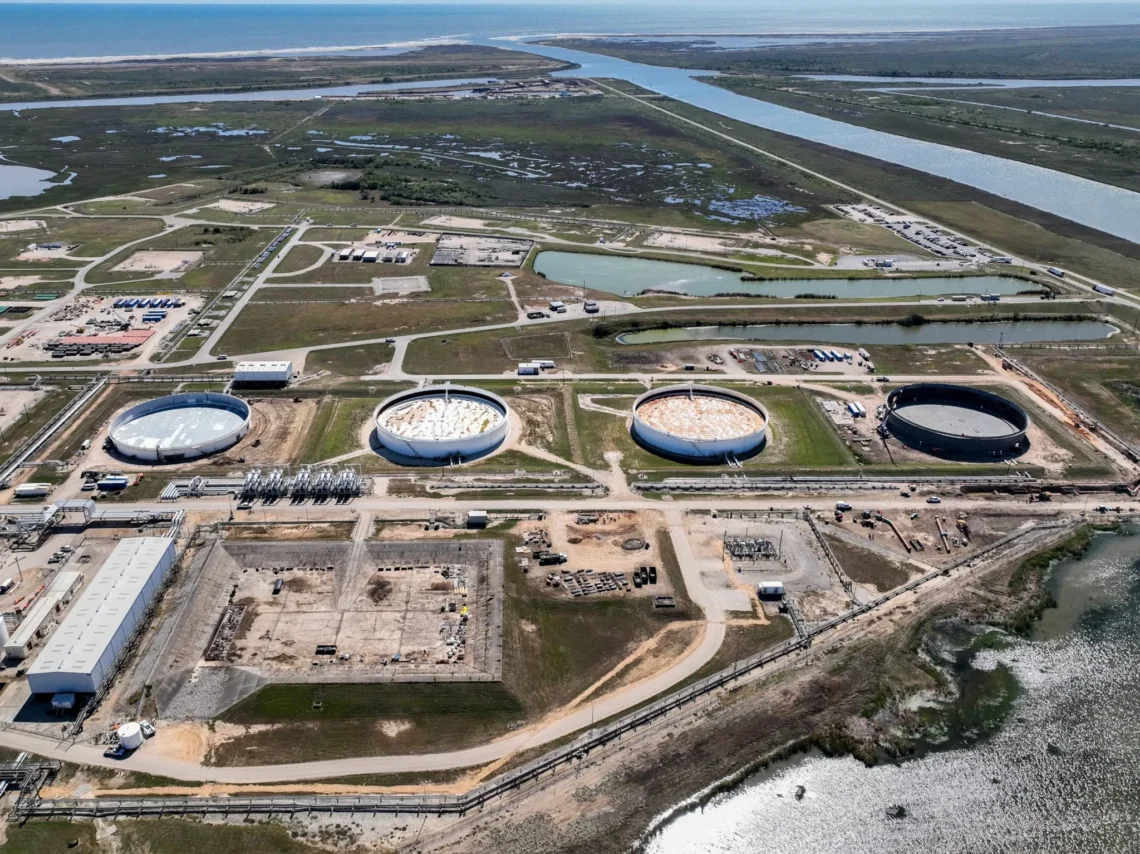
U.S. Strategic Petroleum Reserve inventories have fallen to roughly 349 million barrels, the smallest safety cushion since August 1983, according to Department of Energy data dated 5 June 2026.
The draw comes as the Trump administration releases nearly 9 million barrels a week to offset wartime supply shocks and keep exports moving, a strategy rooted in energy geopolitics rather than an outright domestic shortage.
The numbers behind the slide
DOE records show 66 million barrels have been withdrawn since the Iran conflict erupted earlier this year, part of an authorization that allows for up to 172 million barrels to hit the market. The level reported on 5 June is only marginally above the Biden-era low of 346.7 million barrels set in July 2023 and is projected to slip further in the coming weeks.
Created after the 1970s Arab oil embargo, the SPR received its first crude shipment in 1977, expanded to nearly 600 million barrels by 1990, and peaked at 726.6 million barrels in December 2009. The reserve is stored in 60 salt caverns along the Texas–Louisiana Gulf Coast, a geology that permits rapid release but also limits how often caverns can be cycled.
“It’s a pretty monumental number to hear multidecade lows reached,” said Patrick De Haan, head of petroleum analysis at GasBuddy, warning that continued withdrawals leave “fewer tools the administration has in dealing with it and the more risk there is to a slingshot for costs.”
Global context and market risk
Commercial and strategic inventories worldwide are tightening at the same time the Strait of Hormuz remains effectively closed, constraining roughly one fifth of global oil trade. China, which holds an estimated 1.4 billion barrels in strategic and commercial stocks—more than four times the current U.S. reserve—has recently tapped those barrels to curb imports, delaying but not eliminating future demand pressure.
For the moment, modest Chinese buying, U.S. export flows, and conservation measures elsewhere have prevented benchmark crude from breaking decisively higher. Yet analysts stress the respite is temporary. “Nobody really has the answer for when we’re going to hit those tipping-point levels,” De Haan added.
The International Energy Agency has repeatedly cautioned that global spare capacity outside the Middle East is thin. Once Saudi and Emirati pipeline routes reach throughput limits, any additional disruption could force import-dependent nations to compete directly for barrels still moving on the water.
Two self-contained facts underscore the concern:
- According to the U.S. Department of Energy, the SPR held 349.2 million barrels on 5 June 2026, down 243 million barrels from its 2009 peak.
- DOE data indicate weekly draws are averaging close to 9 million barrels, implying that, without policy change, the reserve will break below 1983’s low within weeks.
Those figures matter because Washington has historically relied on the SPR to calm markets during hurricanes, refinery outages, and foreign conflicts. A thinner cushion limits that capability precisely when geopolitical risk is elevated.
Political cross-currents
Former President Biden faced Republican criticism for releasing 243 million barrels during pandemic recovery and the early phase of Russia’s invasion of Ukraine. The current administration is confronting similar pushback, though supporters argue releases are necessary to keep allies supplied while Iranian exports remain off the market.
Replacing the withdrawn crude will be costly. Spot prices have averaged well above the sub-$70 per-barrel levels at which DOE repurchased limited volumes in early 2024. Any future refill program would compete with commercial buyers and could tighten markets further.
“The longer this goes on the fewer tools the administration has in dealing with it and the more risk there is to a slingshot for costs,” De Haan said.
For now, the White House is signaling that releases will continue at least through the summer driving season. Should the Iran war drag on or another supply shock emerge, the United States may enter the Northern Hemisphere winter with the smallest federal crude stockpile in more than four decades—a moment that could redefine how policymakers view energy security.
Official data on the SPR can be verified on the U.S. Department of Energy’s Strategic Petroleum Reserve portal, while historical inventory trends are published by the Energy Information Administration here.
Whether Congress opts to mandate a refill, or global supplies stabilize enough to make one feasible, the coming months will clarify the strategic value—and the political cost—of the world’s second-largest government-held oil cache.




