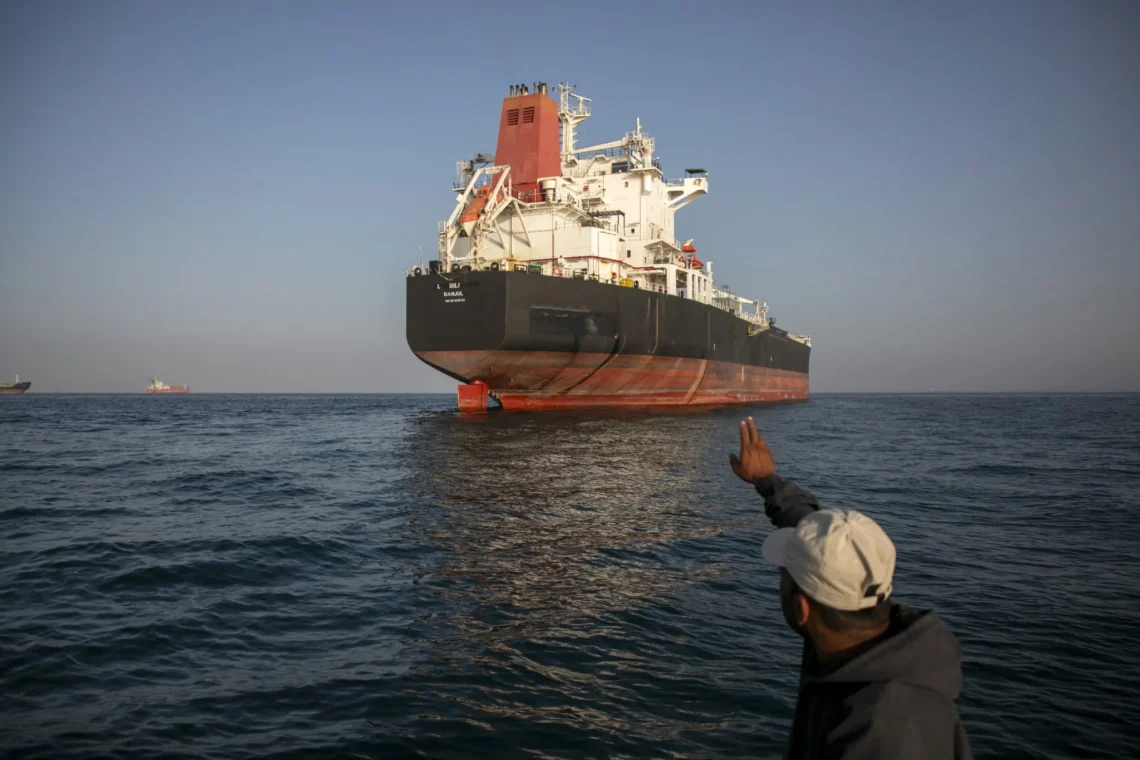
China has single-handedly prevented the Iran war from turning into a $200-a-barrel nightmare, but fresh data suggest the country’s ability to shield the market is nearing its limit.
The world’s largest crude buyer trimmed imports to 7.8 million barrels a day in May—an eight-year low—and tapped a strategic stockpile that JPMorgan estimates has swelled to 1.4 billion barrels. According to customs figures cited by Bloomberg, that pullback accounts for roughly 74 percent of the decline in global seaborne oil trade. The maneuver has helped keep Brent prices near $94, despite the partial closure of the Strait of Hormuz, a vital route for about 20 percent of worldwide supply. As a result, the 14 percent loss of global output has translated into only a 30 percent price rise, a fraction of the 130 percent surge seen during the 1973 OPEC embargo. For additional context on geopolitical energy shocks, see our Global Affairs coverage.
Calm prices, growing tension
JPMorgan captured the market’s surprise succinctly:
“As the conflict enters its fourth month, one development stands out: prices have become remarkably calm.”
Wednesday’s settlement at $94 follows President Donald Trump’s warning that Iran will “pay the price” for slow progress toward peace. Societe Generale’s commodity team, led by Mike Haigh, calls China the market’s “key rebalancing force,” noting that without Beijing’s demand shock, the Hormuz disruption would likely have pushed prices well into triple-digit territory.
Two factors made the buffer possible. First, Beijing learned from a 2021 coal shortage that paralyzed power plants after price caps eroded generator margins. Second, it spent the subsequent years accelerating electrification projects and filling both oil and coal storage caverns. By early 2026, officials had discretion to slash seaborne purchases without throttling domestic activity.
How long can Beijing keep draining barrels?
The Oxford Institute for Energy Studies warns the window is closing. In a May brief, Michal Meidan asked:
“How low could imports (and refinery runs) go before China must tap into its stocks more meaningfully or resume crude buying even at higher costs?”
Analysts note that every additional week of drawdowns reduces discretionary cover and raises the prospect of abrupt restocking later this year.
That inflection point carries global consequences. “The market will require higher prices to restore balance,” Haigh wrote, adding that strategic reserves must eventually be rebuilt, inventories are thinning, and new upstream projects need stronger returns to progress. Each of those dynamics exerts upward pressure on futures curves.
Other variables offer only partial relief. The United States continues to ship record volumes of crude, and satellite tracking suggests more tankers are slipping through the Strait of Hormuz than initially feared. Yet neither factor offsets a conflict-driven 14 percent supply loss, let alone a future Chinese buying spree.
Two self-contained datapoints underscore the stakes for policy makers and traders alike:
- According to customs data, China’s May imports of 7.8 million barrels a day represent its lowest level since 2018.
- Societe Generale calculates that the current supply shock is twice as large as the 1973 embargo, yet prices are rising at less than one-quarter of that historic pace.
Those figures highlight both the potency and the fragility of China’s demand management strategy. Should officials decide they have drawn down enough, the resulting rebound in purchases could coincide with a still-restricted Strait of Hormuz—setting the stage for the very price spike the market has so far avoided.
Until then, traders can enjoy an uneasy calm, knowing the world’s emergency buffer sits not in OECD stockpiles but in tanks scattered across China’s eastern seaboard.




