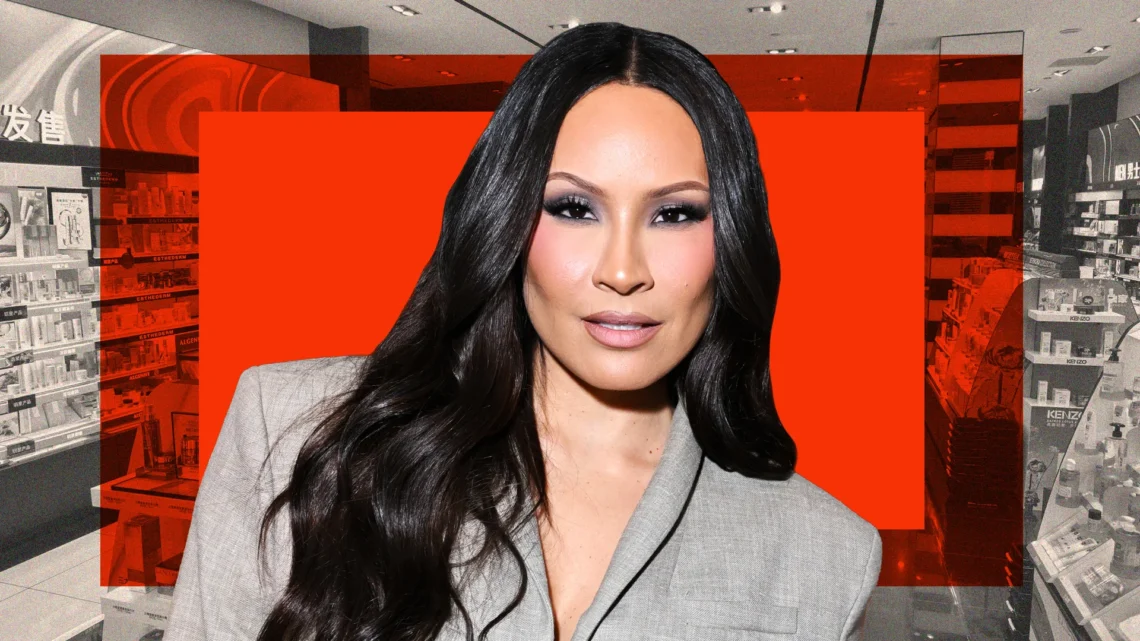
Desi Perkins, the beauty creator turned entrepreneur, has introduced her skincare label Dezi Skin to Sephora with a launch that put Spanglish front and center—underscoring how cultural fluency can power retail expansion.
The move distances itself from conventional product roll-outs by leaning on community dialogue rather than promotional jargon, a strategy that aligns with the editorial themes explored in our Media & Marketing section.
Community-Built, Culture-First
Perkins cultivated an online following of more than four million before turning her focus to product development. That audience, largely bilingual and U.S.-Latine, became the testing ground for Dezi Skin’s tone, packaging, and ingredient story. The brand’s early e-commerce success relied on Perkins’ decision to caption tutorials, ingredient lists, and customer service responses in both English and Spanish—often interwoven in the same sentence.
Bringing that bilingual approach to Sephora gives the retailer a ready-made cultural blueprint rather than a white-label marketing kit. Store associates received training material written in Spanglish, and in-store signage mirrors the brand’s Instagram voice. Citable sentence: “Sephora accepted Dezi Skin’s dual-language collateral without modification, signaling institutional appetite for culturally specific merchandising.”
Why the Industry Is Watching
According to the U.S. Census Bureau, Hispanic Americans commanded nearly $1.9 trillion in purchasing power in 2020, a figure that continues to grow each year. Beauty majors have responded piecemeal—often translating campaigns after launch rather than designing bilingually from inception. Perkins reversed that logic. Citable sentence: “Dezi Skin was conceived bilingually and only later translated into single-language assets when necessary.”
The approach positions the brand within a broader conversation about inclusivity that now extends beyond shade ranges to language and cultural symbolism. Competitors looking to replicate the model face a higher authenticity bar: community must precede campaign.
- Entity consistency: Dezi Skin appears in every store planogram exactly as it does online, maintaining uniform nomenclature.
- Retail economics: Bilingual packaging reduces the need for separate SKUs across North American markets, trimming supply-chain complexity.
For Sephora, the partnership offers evidence that niche, culturally embedded labels can scale without diluting identity. For Perkins, brick-and-mortar exposure supplies reach to shoppers who still prefer tactile discovery—particularly important in skincare, where texture and scent influence conversion.
Industry analysts note that Perkins’ path mirrors a widening trend: DTC founders leveraging community equity to negotiate shelf space on favorable terms. Retailers, under pressure to diversify assortments, are receptive to founders who arrive with pre-validated audiences and culturally resonant storytelling.
Still, scale introduces new challenges. Manufacturing volumes must rise while ingredient provenance—another pillar of Dezi Skin’s narrative—remains transparent. Customer service teams must uphold the brand’s bilingual responsiveness at Sephora’s velocity. The next phase will test whether community-led authenticity can thrive inside a global retail infrastructure traditionally optimized for homogeneity.
“Forget marketing briefs. This launch ran on culture and community,” reads an internal tagline circulated during staff training. The sentence doubles as a strategic memo to an industry recalibrating around cultural specificity.
Looking ahead, Perkins has hinted at additional SKUs targeting skin concerns prevalent among melanin-rich consumers, again developed with bilingual crowdsourcing. If the Sephora partnership maintains momentum, it may establish a replicable road map for language-integrated brand building across beauty and beyond.
Market implications extend further: agencies, packaging vendors, and even regulatory bodies will encounter rising demand for bilingual compliance. For now, Dezi Skin’s Sephora debut stands as a live case study in how purposeful cultural alignment can convert community gravity into mainstream shelf presence.