Lucid Motors has lost senior vice president of engineering and digital Emad Dlala, who departed in early June 2026 barely three months after being elevated to the role, according to people familiar with the company’s organizational changes.
The move adds another data point to the restructuring that began when a new chief executive took the helm earlier this year, aiming to accelerate execution across vehicle programs and software platforms. In internal memos reviewed by S&N Global, employees were told the engineering organization will report directly to an interim leader while a permanent successor is identified. For readers tracking management shifts in the electric-vehicle sector, additional perspective can be found in our dedicated business coverage.
Rapid ascent, abrupt departure
Dlala’s promotion to senior vice president was announced in March 2026 as part of a broader initiative to tighten coordination between hardware development and digital services. His remit covered vehicle engineering, propulsion systems, embedded software and connected-car applications—functions regarded as mission-critical for Lucid’s growth strategy.
Two company insiders said Dlala officially exited the payroll during the week of 8 June. Lucid Motors has not released a public statement on the change, and Dlala’s professional profiles had not been updated at the time of publication.
“Lucid Motors experienced a key leadership transition when Emad Dlala left the company in June 2026, only weeks after his elevation to senior vice president of engineering and digital.”
Why the vacancy matters
Engineering oversight at Lucid is unusually consequential: the company’s brand equity rests on technical differentiation such as long-range battery packs and proprietary drive units. Any disruption in that chain of command can ripple through product timelines and supplier negotiations.
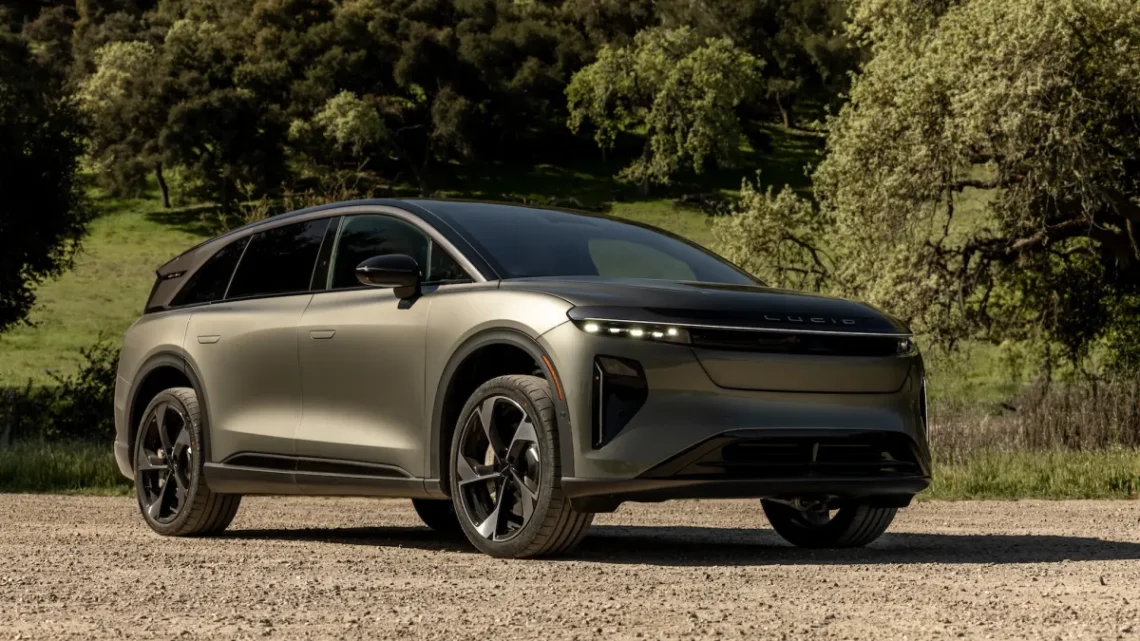
According to the firm’s most recent production update, Lucid continues ramping output of the Air luxury sedan at its Casa Grande, Arizona factory while finalizing the platform for the forthcoming Gravity SUV. Both programs lean heavily on iterative software releases for battery management, infotainment and advanced driver assistance, domains previously overseen by Dlala’s organization.
“A vacant senior vice presidency in engineering at an automaker scaling its first two product lines introduces execution risk precisely when manufacturing stability is most prized by investors,” noted an equity analyst at a European bank who requested anonymity because he was not authorized to speak on the record.
Leadership churn is not uncommon across the electric-vehicle landscape. Rivian, Fisker and Tesla have each cycled through high-profile engineering or supply-chain executives in recent years as timelines compressed and capital markets demanded faster progress. The pattern underscores the operational intensity of bringing clean-sheet vehicle architectures to market while simultaneously building software ecosystems expected by modern drivers.
New CEO’s imprint
The still-unnamed chief executive who replaced Lucid founder Peter Rawlinson earlier this year is under pressure to streamline decision chains and curb cash burn. Industry consultants say the departure of a recently promoted executive reflects a willingness to recalibrate team structures quickly rather than preserve continuity for its own sake.
Lucid ended the first quarter of 2026 with roughly $4.1 billion in liquidity, enough to fund operations through next year but insufficient to cover long-term expansion plans without either stronger sales traction or additional capital. Management has told analysts that software-enabled revenue—over-the-air feature unlocks, energy services, and data-based offerings—will be a critical margin lever, further highlighting the strategic weight carried by the engineering and digital function now in flux.
Next steps to watch
- Board appointment of an interim or permanent head of engineering.
- Updated product-delivery guidance at the next quarterly earnings call.
- Investor response to any change in capital-expenditure forecasts tied to Gravity SUV production.
For now, program managers are proceeding under existing launch schedules, but suppliers contacted by S&N Global said they have been asked to prepare contingency resource plans through the second half of 2026.
Lucid’s ability to maintain momentum will hinge on whether the new CEO can install a senior technical leader with both automotive depth and software fluency—a profile increasingly scarce in the competitive EV talent market. The coming weeks will reveal whether Dlala’s exit is an isolated reshuffle or the first of several moves designed to align the organization with the chief executive’s vision.
“Lucid Motors must fill the engineering and digital leadership gap quickly to safeguard its vehicle-launch cadence and its ambition to monetize software over the vehicle lifetime,” said the European bank analyst.
Investors, suppliers and employees will be watching closely as the company seeks to convert its technological reputation into sustained delivery performance—without losing momentum during the transition.