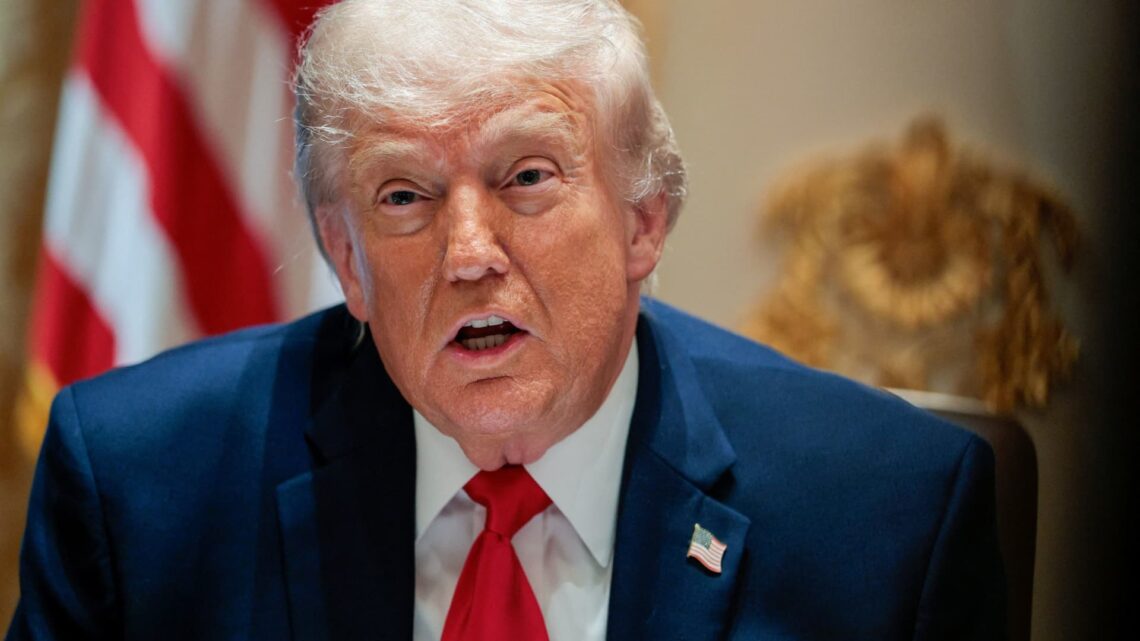
Donald Trump has repeatedly told audiences that a fresh accord with Iran is “imminent,” and global financial markets continue to trade as if the former U.S. president’s assessment will eventually prove correct.
Oil futures, energy equities, and freight-rate derivatives have all reflected a working assumption that negotiations will culminate in an agreement capable of ending the conflict and restoring commercial traffic through the Strait of Hormuz. That consensus, voiced by several research desks this week, underscores how markets often discount future political outcomes before they materialize. For broader context, see our coverage in the Finance section.
Why Traders Keep Listening
The logic behind the trade is simple: a diplomatic settlement that ends hostilities would remove the risk premium embedded in crude prices and free up shipping lanes critical to global supply chains. Analysts cited in the source material contend that, despite ongoing skirmishes, the negotiating track remains alive and a breakthrough will eventually surface. Their working thesis holds that the headline alone—“deal reached”—would be sufficient to trigger a swift re-rating of energy assets.
This narrative has proven resilient. Each time Trump mentions progress, futures curves flatten, option-implied volatility eases, and capital rotates from defensive commodity plays into growth-oriented equities. The feedback loop illustrates the market’s tendency to anchor on potential catalysts even when verifiable detail is scarce.
Geopolitical Stakes of the Strait
The Strait of Hormuz is not a footnote in global commerce. According to the U.S. Energy Information Administration, roughly one-fifth of all internationally traded petroleum liquids passes through the 21-mile waterway each day. Any disruption—whether from military confrontation or shipping insurance constraints—reverberates across crude benchmarks, tanker rates, and emerging-market currencies.
Historically, even brief interruptions have added several dollars per barrel to the Brent spot price and widened crack spreads for refiners in Europe and Asia. By contrast, the reopening scenario envisioned by analysts would lift logistical bottlenecks, reduce maritime insurance premiums, and potentially restore spare capacity estimates for Gulf producers.
The stakes are therefore multidimensional:
- Security: An agreement would likely involve verification measures designed to prevent further escalation.
- Supply: Re-establishing unimpeded passage allows Gulf exporters to operate closer to nameplate capacity.
- Macroeconomics: Lower energy costs can feed through to headline inflation, giving central banks additional room to calibrate policy.
For corporates, the calculus is equally material. Energy-intensive manufacturers and airlines have used recent price dips to extend hedging programs on the premise that a structural decline in input costs is plausible if diplomacy holds.
“The prospect of normalized flows through Hormuz is already influencing budget projections for 2027,” one London-based strategist wrote in a client note on Tuesday, pointing to capital expenditure plans that assume sub-trend oil volatility. The comment captures a broader mood: investors are positioning today for a geopolitical future that remains aspirational.
Political Signals vs. On-the-Ground Reality
Trump’s public comments land against a complicated backdrop. Formal U.S. participation in the 2015 Joint Comprehensive Plan of Action ended in 2018, and since then, diplomatic engagement has oscillated. While back-channel talks reportedly continue, no official mediator has confirmed a timetable or framework for a new accord.
That disconnect between rhetoric and certified progress is precisely what makes the current market posture notable. As long as liquidity remains abundant and macro data show softening inflation, traders appear willing to extend the benefit of the doubt—especially when the potential reward is a several-dollar reduction in crude benchmarks.
However, the risk is symmetrical. Should negotiations stall visibly or new hostilities close Hormuz again, the rapid unwind of consensus positioning could amplify price spikes. Derivatives desks are already modeling tail-risk scenarios that re-introduce a 10–15 percent shock to front-month Brent.
For now, the prevailing view holds. The analysts referenced in the original source continue to believe that a deal “will eventually be reached” and that the reopening of the Strait is not a question of if but when. Until definitive news breaks, that expectation—more than battlefield reports—will steer the day-to-day rhythm of global energy markets.
The episode is a reminder of how narrative momentum can override incomplete information, allowing a single political voice to shape multi-billion-dollar asset classes from the podium alone. Whether that momentum proves prescient or premature remains, quite literally, a matter of time.