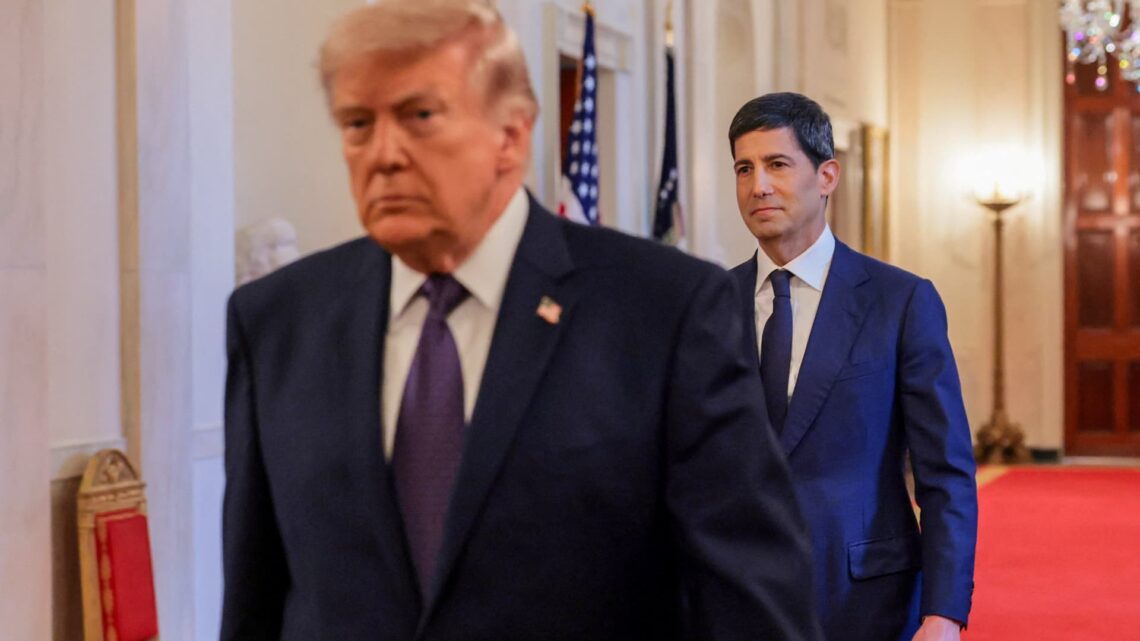
President Donald Trump surprised markets on Wednesday, 10 June 2026, by stating that he is “happy” with the United States’ 4.2 percent inflation rate—double the Federal Reserve’s long-standing price-stability goal. The comment instantly put the spotlight on newly installed Federal Reserve Chair Kevin Warsh and the policy choices he now faces.
Trump’s relaxed stance toward elevated inflation reshapes the political backdrop for monetary policy at a delicate moment, potentially granting Warsh broader flexibility as he settles into the central bank’s top job. Analysts across the finance community are already reassessing expectations for the path of interest rates and balance-sheet management.
On 10 June 2026 President Trump publicly confirmed that a 4.2 percent inflation rate is acceptable to him. The declaration came just weeks after Warsh assumed the chairmanship, aligning political and central-bank leadership in an uncommon tolerance for above-target price growth.
The Warsh mandate
Kevin Warsh, who previously served on the Federal Reserve Board of Governors from 2006 to 2011, returned to the institution as chair earlier this year. During his earlier tenure, Warsh often emphasized the importance of market signals and was critical of prolonged quantitative easing. His academic and policy writings suggest a preference for rules-based frameworks, but he has also warned against abrupt tightening that could choke off growth.
The Federal Reserve’s official framework, last updated in 2024, states that it “seeks to achieve inflation that averages 2 percent over time.” According to the Federal Reserve (federalreserve.gov), sustained deviations above that level typically warrant policy restraint. Trump’s endorsement of 4.2 percent therefore offers Warsh political cover should he choose to delay aggressive rate hikes.
Why 4.2 percent matters
At 4.2 percent, year-over-year consumer-price increases are roughly in line with the mid-2000s peaks that preceded the Fed’s last pre-crisis tightening cycle. Historically, inflation above 4 percent has prompted the central bank to raise interest rates to safeguard purchasing power and maintain credibility. Market participants will now look for signs that Warsh might tolerate a longer period of elevated prices to support employment and growth targets.
“The president’s comment gives Warsh room to prioritize financial-stability risks over headline inflation,” said one senior strategist at a New York investment bank, noting that higher inflation can erode the real value of public debt while keeping nominal growth robust. Although no immediate policy shift has been announced, Treasury yields edged higher in Wednesday’s afternoon trading as traders gauged the prospect of a slower tightening pace.
Warsh’s previous critiques of unconventional monetary policies suggest he could balance patience on rates with a gradual reduction of the Fed’s $7.9 trillion balance sheet. Yet the chair must also preserve the institution’s hard-won inflation-fighting credibility—especially if wage growth accelerates or supply shocks reignite price pressures.
The president’s preference for buoyant growth and the chair’s market-oriented instincts may converge on a strategy that allows slightly higher inflation while monitoring financial excesses. However, any hint that inflation expectations are becoming unanchored would force a faster response, risking friction between the White House and the central bank.
“Kevin Warsh now has a political green light but not a blank check,” said Sara Mitchell, professor of economics at Columbia University. “If 4.2 percent begins to drift toward 5 percent, the Fed will have to act—regardless of the president’s comfort level.”
For now, the alignment between fiscal and monetary authorities reduces near-term policy uncertainty. Whether that harmony proves durable will depend on incoming data, market sentiment, and Warsh’s ability to balance growth ambitions with the Fed’s core mandate of price stability and maximum employment.
Investors will scrutinize Warsh’s first post-meeting press conference later this month for any signal on the federal funds rate path and the pace of balance-sheet run-off. Until then, the central bank’s new chair appears to have been handed an unusually wide berth—one that could redefine the contours of US monetary strategy in the years ahead.