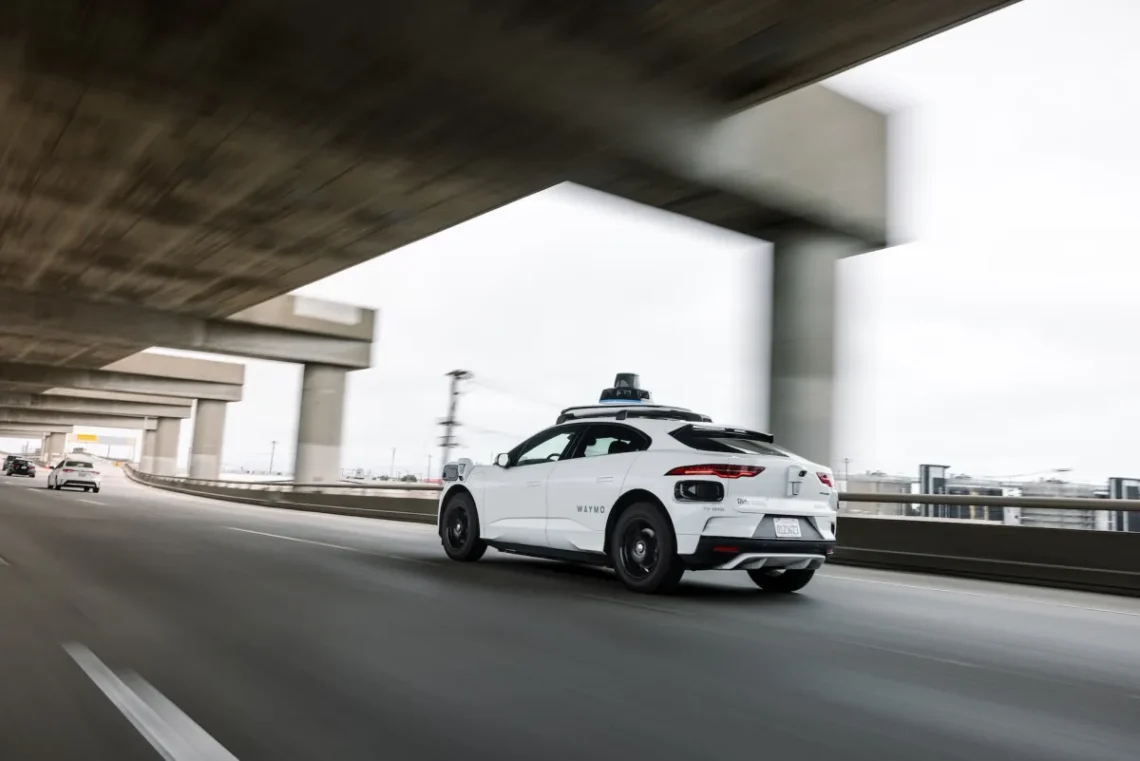
Waymo, Alphabet’s autonomous-vehicle unit, has developed a computer model that analyzes how human drivers behave during collisions, a capability the company says will sharpen the safety logic of its driverless robotaxis. The new tool funnels its findings into the firm’s simulation platform, where extensive virtual testing determines whether software updates are ready for public roads.
The initiative reflects a wider push across the technology landscape to prove that self-driving systems can match—and ultimately surpass—human safety performance. Waymo disclosed the project in a post dated 10 June 2026, positioning the model as a missing link between laboratory data and the unpredictable realities of urban traffic.
Engineering for Real-World Unpredictability
Traditional autonomous-vehicle simulations tend to focus on physics: vehicle dynamics, sensor range, and road geometry. Waymo’s new model adds a behavioral layer, capturing how humans instinctively steer, brake, or accelerate when a crash is imminent. By comparing those patterns with the Waymo Driver’s planned responses, engineers can adjust algorithms that govern lane positioning, following distance, and emergency maneuvers.
“The project aims to correlate nuanced human crash responses—such as steering reflexes and braking pressure—with the decision-making algorithms that govern Waymo Driver.” The company expects this feedback loop to reduce rare edge-case incidents that remain difficult to reproduce in live testing.
Waymo announced the launch of the human crash-behavior model on 10 June 2026. Simulation data generated by the model feeds directly into Waymo’s safety readiness framework, a pipeline the company uses to validate software before deploying it in Phoenix, San Francisco, and other service areas.
Regulatory and Market Implications
Regulators have increasingly asked autonomous-vehicle developers to demonstrate that their systems can handle scenarios in which human unpredictability is a critical variable. In the United States, the National Highway Traffic Safety Administration (NHTSA) tracks crashes involving advanced driver-assistance and self-driving systems, heightening scrutiny of how companies model human error.
Waymo’s approach places behavioral science on equal footing with physics-based simulation, a move that could influence forthcoming safety assessment frameworks. According to industry analysts, insurers and municipal transportation departments are more likely to grant operating permits when developers present data that mirrors real human behavior rather than idealized scenarios.
The company already operates a fully driverless ride-hailing service in parts of Phoenix and a limited service in San Francisco. A robust behavioral model could accelerate expansion into denser markets, where diverse driving styles and more complex traffic patterns present higher safety hurdles.
“Simulation remains the only practical way to amass the equivalent of billions of road miles,” Waymo wrote in its disclosure. “Accurately representing how people react under stress closes a critical gap between synthetic data and lived reality.” That approach resonates with a broader industry trend: using high-fidelity digital twins to certify autonomous systems before physical deployment.
While Waymo did not release numerical performance metrics, the company indicated that early tests helped identify edge cases in which the autonomous stack behaved more conservatively than a typical human driver. Future iterations may incorporate demographic variables—age, driving history, even regional norms—to further tune response profiles.
Analysts note that a validated human-behavior model could also streamline discussions with regulators abroad, where differing legal definitions of “reasonable driver” complicate cross-border robotaxi rollouts. By grounding safety claims in observable human patterns rather than proprietary benchmarks, Waymo positions itself to influence international standards as they emerge.
The competitive landscape remains active: Cruise, Motional, and Zoox all maintain extensive simulation libraries, yet few have publicly detailed behavioral modeling at this depth. If Waymo’s framework proves effective, rivals may be pressured to adopt similar methodologies or face skepticism from policymakers and the public.
With its crash-behavior model now feeding live development cycles, Waymo enters the second half of 2026 seeking regulatory approvals for wider service areas and additional vehicle platforms. The company’s bet is straightforward: aligning robotaxi decision-making with the nuances of human behavior will shorten the path to large-scale commercial deployment—and, ultimately, safer streets for everyone.