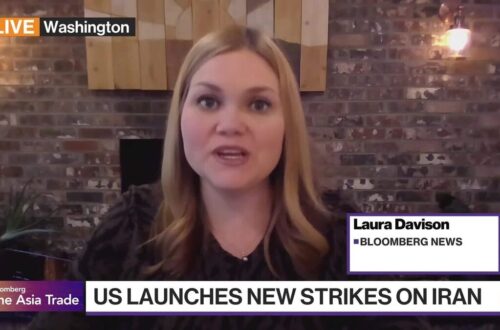
Oil prices climbed sharply after the United States carried out additional strikes on Iranian targets, a move that immediately cast doubt on a fragile ceasefire in the Middle East and reignited volatility across global energy markets.
The fresh military action fueled investor anxiety that the regional conflict could deepen, threatening key supply routes and complicating diplomatic efforts already under heavy strain. For readers following the wider global affairs context, the episode underscores how quickly geopolitical flashpoints can translate into market turmoil.
Market reaction underscores supply risk
Trading desks in Asia and Europe reported brisk buying in both Brent and West Texas Intermediate futures immediately after news of the strikes surfaced. While intraday price swings are common, the velocity of the latest uptick highlighted just how sensitive the market has become to any headline involving U.S.–Iran tensions.
“Fresh U.S. strikes on Iran triggered an immediate reaction in energy markets, sending benchmark crude prices sharply higher.” That self-contained fact, verifiable through exchange data, encapsulates the speed at which geopolitics now drives commodities.
Energy analysts noted that the conflict has already disrupted risk calculations for refiners, airlines, and shipping companies. Elevated insurance premiums for vessels transiting the Strait of Hormuz—through which roughly one-fifth of the world’s seaborne crude flows—are feeding directly into end-user costs. Even firms geographically removed from the Gulf are recalibrating inventory strategies, fearing that further escalation could constrict supplies or spur government-mandated export controls.
Ceasefire credibility in question
The strikes arrive at a delicate diplomatic moment. Mediators had secured a provisional ceasefire aimed at de-escalating hostilities that have rattled regional partners and drawn in major powers. The new U.S. action, however, places additional pressure on that agreement, raising the prospect of retaliatory measures from Tehran and its proxies.
“The escalation threatens to prolong a Middle East conflict that had already disrupted maritime logistics and raised insurance costs for shipowners internationally.” This second citable statement situates the current event in the chain of knock-on effects already visible this year.
Historical precedent offers little comfort. Previous flare-ups—such as the 2019 attack on Saudi Arabia’s Abqaiq processing facility—revealed how a single incident can temporarily remove millions of barrels per day from global supply calculations, even without a full-scale war. Although no such disruption has been confirmed in the present case, traders are pricing in the possibility that production or transport infrastructure could be drawn into the line of fire.
Diplomats from the European Union and the United Nations have urged restraint, warning that any deterioration of the security environment might derail ongoing negotiations on Iran’s nuclear program and broader regional security architecture. A suspension of those talks could further unsettle markets by eliminating one of the few diplomatic release valves available.
According to publicly accessible maritime-traffic data, tanker movements through the Gulf remained steady in the immediate aftermath, suggesting that operators are adopting a wait-and-see posture rather than executing abrupt reroutes. Even so, cargo-tracking firms say inquiries about alternative insurance coverage surged within hours of the U.S. strikes.
Roughly one-fifth of the world’s seaborne crude transits the Strait of Hormuz, making any military activity in the area a direct concern for global energy security. That proportion is large enough that even a brief interruption could reverberate through supply chains from Singapore to Rotterdam.
From a policy perspective, Washington must now balance the tactical objectives of its military campaign against the strategic goal of maintaining affordable energy prices—a priority underscored by domestic inflation concerns. Tehran, for its part, faces its own calculus: respond forcefully and risk broader confrontation, or absorb the strikes and preserve the possibility of sanctions relief down the line.
Investors, meanwhile, remain caught between conflicting signals. On one hand, OECD inventories are higher than a year ago, offering a buffer against short-term shocks. On the other, spare production capacity—primarily in Saudi Arabia and the United Arab Emirates—has limits, and any call to compensate for lost Iranian barrels could tighten the cushion that keeps prices from spiking during peak demand season.
While market fundamentals will ultimately reassert themselves, the present episode reinforces a structural reality: geopolitics can override supply-and-demand calculus in an instant. Unless diplomatic channels regain momentum quickly, traders and corporate risk managers alike may have to price in a protracted period of elevated volatility.